1560 onwards
Reformation and continuity
Scottish legislation suppressed papal authority and the public celebration of Mass, yet Catholic clergy and communities persisted in Aberdeen. Missionaries, including Jesuits, later maintained access to the Sacraments through secret chapels.
1687–1700s
The Scottish Mission
A more regular succession of priests served Aberdeen. Vicars Apostolic and missionary clergy ministered across a vast northern territory stretching well beyond the city.
1717–1799
Scalan and priestly formation
The small seminary at Scalan in Glenlivet helped educate generations of future priests during an era when Catholic formation in Scotland was exceptionally difficult.
1785–1855
The Gordon brothers
John and Charles Gordon were central to Aberdeen’s Catholic mission. Charles Gordon’s long ministry connected the era of discreet chapels with the growth that eventually required a larger church.
1860
St. Mary’s opens
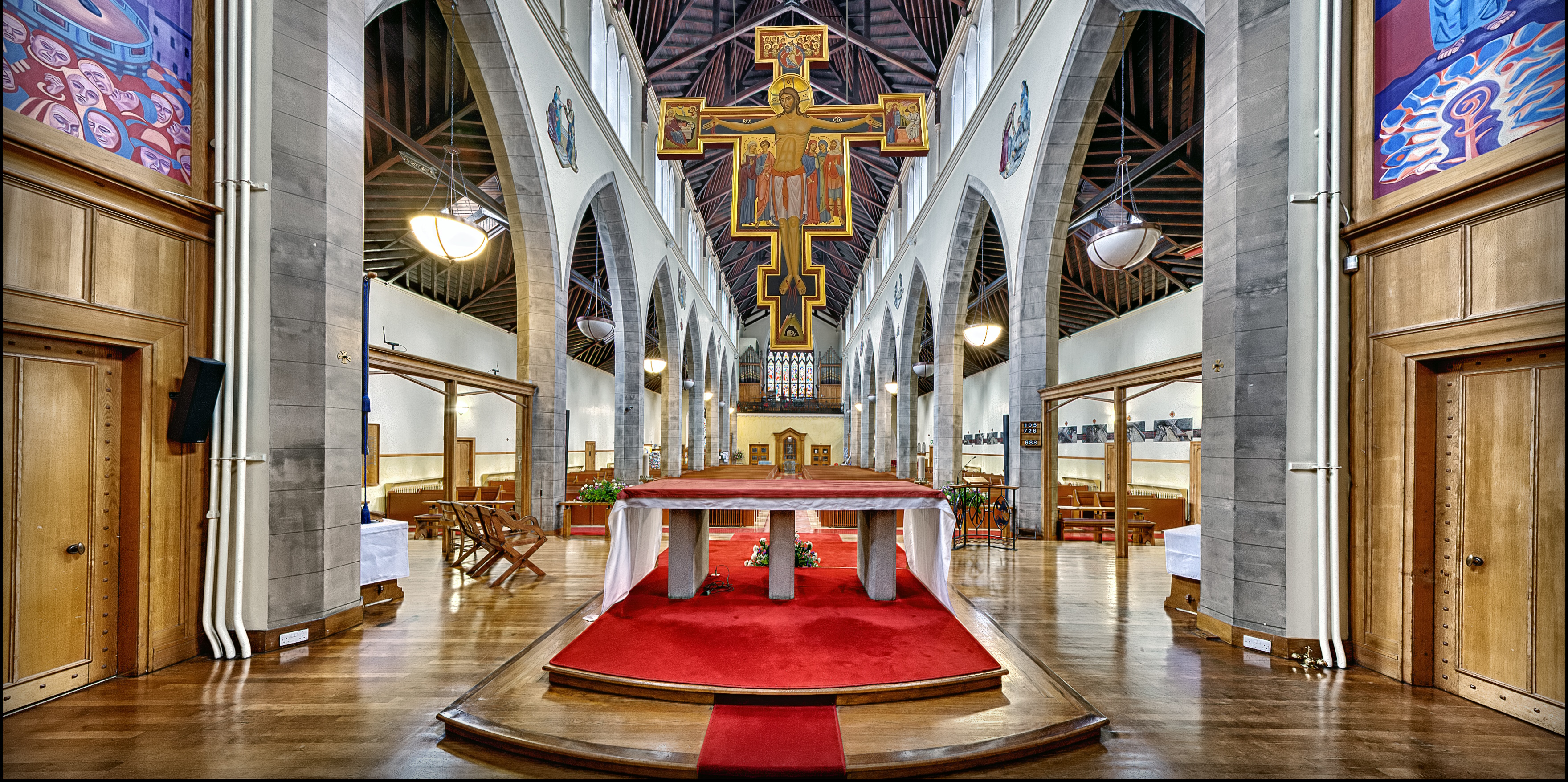
The present church in Huntly Street was completed and dedicated on 21 December 1860 under Fr William Stopani, providing a new focal point for Aberdeen’s expanding Catholic population.
1869–1878
From Pro-Cathedral to Cathedral
After Bishop James Kyle’s death, St. Mary’s served as a Pro-Cathedral. When the Scottish Catholic hierarchy was restored in 1878, the Diocese of Aberdeen was established and St. Mary’s became its Cathedral.
19th century
A busy parish life
Regular Masses, catechesis, Benediction, preaching, baptisms, confessions and parish schools formed an intensive rhythm of Catholic life around Huntly Street and the wider city.
Second World War
Service in a garrison city
As Aberdeen received large numbers of service personnel, Cathedral organisations provided practical hospitality, including canteen facilities and places of rest.
1950s–1960s
Renewal of the building
The Cathedral interior and entrances were adapted and improved, with changes anticipating the liturgical reforms that followed the Second Vatican Council.